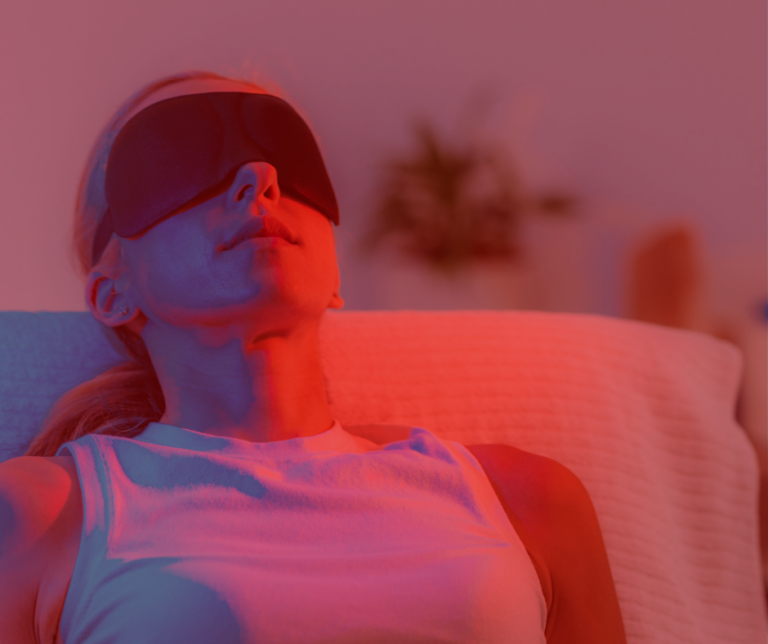
Over the past few years, red light therapy has exploded in popularity. Everywhere you look, there seems to be a new belt, mask, panel, wrap, helmet, or gadget promising better skin, less pain, more energy, faster recovery, and the wellness equivalent of a magic wand.
As a result, one of the most common questions we hear at The Peak Wellness Spa is: “Do I really need a full-body treatment when I can buy a red light device online?”
The answer is not always simple. Many at-home devices can absolutely play a role in a wellness routine. However, understanding how photobiomodulation works can help you make a more informed decision.
Photobiomodulation is the scientific term for using specific wavelengths of light to support cellular function. Think of your cells as tiny rechargeable batteries.
Over time, stress, aging, poor sleep, inflammation, injuries, and everyday life can affect how efficiently those batteries operate.
Photobiomodulation helps support the mitochondria, often referred to as the powerhouses of the cell. When mitochondria function more efficiently, cells may produce energy more effectively and support recovery, repair, circulation, and overall wellness.
This is one reason red light therapy has become increasingly popular among people focused on vitality, healthy aging, athletic recovery, and performance.
One of the biggest misconceptions about red light therapy is that if a device lights up red, it must be doing the same thing as every other device.
Not exactly.
The science of photobiomodulation involves much more than simply shining a red light on the body.
Different wavelengths interact with tissues in different ways. For example, red wavelengths are often associated with skin health and circulation, while near-infrared wavelengths can penetrate deeper and are commonly used in applications focused on muscles, joints, recovery, and overall wellness.
This is why two devices that look similar may provide very different experiences.
In addition, many advanced photobiomodulation systems utilize multiple wavelengths rather than relying on a single wavelength of light.
Common therapeutic wavelengths include:
• 635 nm red light
• 660 nm red light
• 810 nm near-infrared light
• 850 nm near-infrared light
• 940 nm near-infrared light
Think of it like having multiple tools in a toolbox.
A hammer is useful, but it cannot do every job.
Similarly, different wavelengths may support different tissues and biological processes. As a result, wavelength selection is one factor healthcare professionals often evaluate when comparing red light therapy devices.
Wavelengths are important, but they are only part of the equation.
Imagine trying to water a garden with a spray bottle. Now imagine using a sprinkler system.
Both deliver water. However, the amount of coverage is dramatically different.
Light therapy works similarly. The amount of therapeutic light delivered, treatment time, distance from the device, and overall treatment coverage can all influence the experience. This is where many people have their biggest “aha” moment.
If your goal is to address a specific area, such as a knee, shoulder, or elbow, a targeted device may be perfectly reasonable.
However, many people seek photobiomodulation for broader wellness goals such as recovery, healthy aging, circulation, energy support, exercise recovery, and overall vitality.
In those situations, treating the entire body is very different from treating a small area at a time.
At The Peak Wellness Spa, we wanted to offer a solution that aligned with our whole-body approach to wellness.
That is why we selected the TheraLight 360, a medical-grade full-body photobiomodulation bed that incorporates five therapeutic wavelengths: 635 nm, 660 nm, 810 nm, 850 nm, and 940 nm.
Rather than repositioning a small panel over different areas of the body, patients can comfortably receive full-body exposure during a single session.
Many of our clients incorporate TheraLight 360 sessions into programs focused on recovery, vitality, healthy aging, exercise performance, and overall wellness.
For patients who ask whether a red light belt or panel can provide benefits, the answer is often yes.
The better question is whether a targeted device delivers the same experience as a full-body medical-grade photobiomodulation system.
For many wellness goals, those are two very different approaches.
In recent years, Red light therapy has earned a great deal of attention, and for good reason.
However, understanding the science behind photobiomodulation can help separate marketing claims from meaningful treatment considerations.
The color of the light is only one part of the story.
Wavelength selection, power output, treatment coverage, and treatment consistency all play a role in the overall experience.
Whether your goal is recovery, healthy aging, skin health, athletic performance, or simply feeling your best, choosing the right approach can make a meaningful difference.
At The Peak Wellness Spa, we believe education comes first.
Our goal is to help you understand your options, answer your questions, and create a personalized wellness plan that supports your long-term vitality and longevity.
If you are curious about full-body photobiomodulation and would like to experience the TheraLight 360 for yourself, schedule a consultation with our team to learn more.

Blending science & nature to promote wellness.
Discover the breakthrough Ultra+ with DE|RIVE® serum for healthier, fuller hair.
Event only pricing • Raffles • Limited seats